


Symptoms and Causes of TMJ Disorders

You may notice it during a simple moment: your jaw clicks while eating, or you feel discomfort when chewing. Sometimes, it’s a dull headache that keeps coming back without a clear reason. These small signs are easy to ignore, especially during busy days.
TMJ disorders affect the jaw joint and surrounding muscles, often showing up as mild symptoms at first. Many people brush these signs off, thinking they will go away on their own. Over time, however, the discomfort can grow and begin to affect daily life.
If you’ve been dealing with these issues, understanding what’s happening is the first step toward relief. Options like TMJ therapy can help address the root cause and restore comfort. In this blog, you’ll learn about the common symptoms, underlying causes, and when it’s time to seek professional care.
What Is a TMJ Disorder?
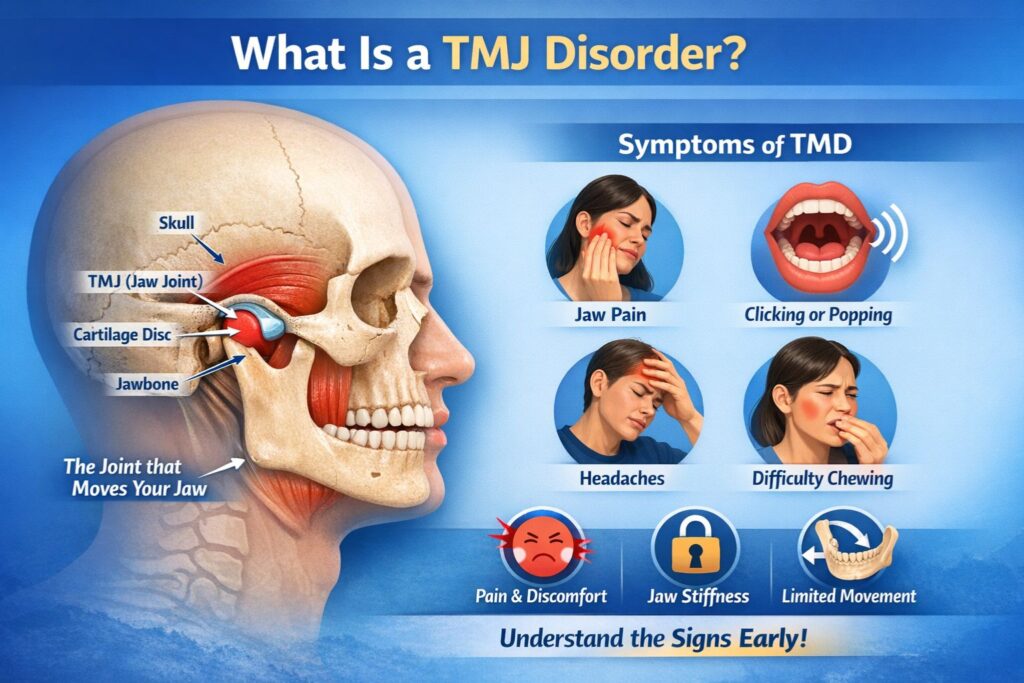
The temporomandibular joint, or TMJ, is the hinge that connects your jaw to your skull. It allows you to open and close your mouth, chew your food, and speak clearly. This joint works with muscles and ligaments to ensure smooth movement throughout the day.
A TMJ disorder, often called TMD, occurs when something disrupts the normal function of this joint. It may involve the joint itself, the surrounding muscles, or both. When the system is not working as it should, even simple actions like talking or eating can feel uncomfortable.
Unlike many dental concerns, TMJ issues are not always visible. You may not notice anything unusual when you look in the mirror. Instead, the symptoms are often felt as pain, tension, or restricted movement. That’s why understanding how this joint works can help you recognize early warning signs and take action before the condition worsens.
Common Symptoms of TMJ Disorders
Jaw Pain or Tenderness
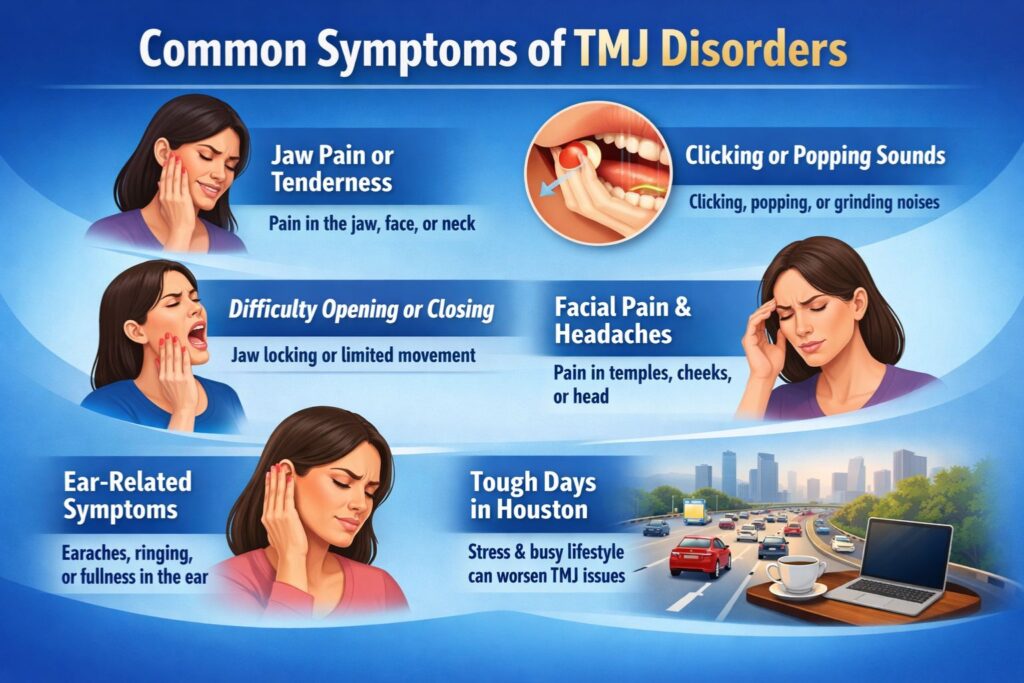
One of the most noticeable signs is pain around the jaw area. This discomfort may spread toward the ear, face, or neck. For many people, the pain becomes more noticeable while chewing, speaking, or even yawning.
You might feel soreness after meals or experience stiffness when waking up in the morning. In Houston’s fast-paced lifestyle, grabbing quick bites at local favorites can make you overlook this pain until it becomes persistent.
Clicking, Popping, or Grinding Sounds
A clicking or popping sound when you open or close your mouth is a common symptom. While it may not always cause pain, it often signals that the joint is not moving properly.
Some people hear grinding noises, which can indicate friction within the joint. Even if it doesn’t hurt, it’s worth paying attention. These sounds are early indicators that something may need attention.
Difficulty Opening or Closing the Mouth
TMJ disorders can limit how far you can open your mouth. You may feel resistance or even experience the jaw “locking” in place.
This can make simple tasks, like eating a sandwich or speaking comfortably, feel difficult. In more severe cases, the jaw may temporarily lock open or closed, requiring effort to return to its normal position.
Facial Pain and Headaches
TMJ issues often cause pain that spreads beyond the jaw. You may feel discomfort in your temples, cheeks, or neck. Many people mistake this for tension headaches or migraines.
If you spend long hours commuting through Houston traffic or working at a desk, these headaches may feel like everyday stress. However, the root cause could be related to jaw tension.
Ear-Related Symptoms
Earaches, a feeling of fullness, or even ringing in the ears can be linked to TMJ disorders. These symptoms can be confusing because they mimic ear infections.
However, there is often no actual issue within the ear itself. Instead, the discomfort comes from the nearby jaw joint. Recognizing this connection can help you avoid unnecessary treatments and focus on the real cause.
What Causes TMJ Disorders?
Teeth Grinding and Jaw Clenching (Bruxism)
Grinding your teeth or clenching your jaw places constant pressure on the TMJ. This often happens during sleep or stressful situations.
Over time, this repeated strain can lead to inflammation and discomfort. Many people are unaware that they grind their teeth until symptoms begin to appear.
Jaw Injury or Trauma
A direct impact on the jaw can damage the joint or surrounding tissues. This may happen during sports, accidents, or falls.
Even a minor injury can disrupt how the joint functions, leading to long-term discomfort if not addressed.
Arthritis in the Joint
Conditions like osteoarthritis or rheumatoid arthritis can affect the TMJ. These conditions cause inflammation and wear within the joint.
As the joint structure changes, movement becomes less smooth, leading to pain and stiffness.
Bite Misalignment
When your teeth do not align properly, it creates uneven pressure on the jaw joint. Over time, this imbalance can strain the TMJ.
This is especially noticeable when chewing or biting down, as certain areas of the jaw absorb more force than others.
Stress and Muscle Tension
Stress often leads to unconscious clenching of the jaw muscles. This constant tension can strain the joint and surrounding muscles.
In a busy city like Houston, where work schedules and daily routines can be demanding, stress-related jaw tension is more common than many realize. Addressing stress can play a key role in improving symptoms and supporting effective TMJ therapy in Houston.
Risk Factors You Shouldn’t Ignore
Certain factors can increase your likelihood of developing TMJ disorders. People between the ages of 20 and 40 tend to report symptoms more frequently. Women are also more likely to experience TMJ-related discomfort.
Lifestyle habits play a significant role. Chewing gum frequently, biting nails, or resting your chin on your hand can strain the jaw over time.
Posture is another overlooked factor. Spending long hours on phones or laptops, whether at home or in Houston’s growing remote work environment, can affect how your jaw aligns with your neck and shoulders.
Being aware of these risks can help you make small adjustments that protect your jaw health in the long run.
When Should You See a Dentist?
Occasional jaw discomfort may not seem urgent, but persistent symptoms should not be ignored. If you experience ongoing pain, difficulty chewing, or frequent headaches, it’s time to seek professional care.
Jaw locking, limited movement, or discomfort lasting more than a few weeks are clear signs that something needs attention. These issues can worsen if left untreated, affecting both comfort and function.
Early evaluation helps identify the cause and prevent complications. At Houston Heights Dentistry, patients often find that addressing symptoms early leads to simpler and more effective care.
How TMJ Disorders Are Diagnosed
Diagnosis begins with a detailed evaluation of your symptoms and jaw movement. A dental professional will check for clicking sounds, tenderness, and range of motion.
They may also examine how your teeth come together to identify bite-related concerns. In some cases, imaging such as X-rays or MRI scans may be recommended to get a clearer view of the joint.
This thorough approach helps ensure that the underlying cause is accurately identified, allowing for a more targeted treatment plan.
Early Management Tips for TMJ Relief
Managing TMJ symptoms early can make a noticeable difference. Start by avoiding hard, chewy, or sticky foods that strain the jaw.
Applying a warm compress can help relax the muscles and reduce discomfort. Gentle jaw exercises may improve flexibility and reduce stiffness.
Pay attention to stress levels. Relaxation techniques such as deep breathing or short breaks during the day can ease tension.
Posture also matters. Keep your head aligned with your spine, especially when working at a desk or using your phone. Small changes in daily habits can support long-term relief and complement professional care.
Treatment Options for TMJ Disorders
Treatment depends on the severity and cause of the condition. Custom nightguards are commonly used to reduce teeth grinding and protect the joint.
Bite adjustments may help correct alignment issues, reducing pressure on the TMJ. Physical therapy can improve jaw movement and strengthen supporting muscles.
In some cases, medication may be recommended to manage inflammation or discomfort. Advanced treatments are considered when conservative approaches are not enough.
At Houston Heights Dentistry, care is tailored to each patient’s needs, ensuring that the TMJ therapy in Houston supports both comfort and function.
What Happens If TMJ Is Left Untreated?
Ignoring TMJ symptoms can lead to long-term complications. Pain may become chronic, making everyday activities uncomfortable.
The joint itself can deteriorate over time, leading to reduced movement and increased stiffness. Eating may become difficult, and speaking can feel strained.
Beyond physical discomfort, untreated TMJ disorders can affect overall quality of life. Sleep disturbances, ongoing headaches, and constant tension can take a toll on daily routines.
Addressing the issue early helps prevent these outcomes and supports long-term oral health.
TMJ disorders often begin with small, manageable symptoms. A clicking jaw or mild discomfort may not seem serious at first. However, these early signs are your body’s way of asking for attention.
Understanding the symptoms and causes allows you to take control of your oral health before the condition worsens. Simple changes, combined with professional care, can make a significant difference.
If you’re noticing persistent jaw discomfort or related symptoms, now is the right time to act. Schedule a consultation with Houston Heights Dentistry to protect your jaw health and restore comfort in your daily life.
People Also Ask
Can stress really cause TMJ problems?
Yes, stress can lead to unconscious jaw clenching or teeth grinding. Over time, this added pressure can strain the joint and trigger pain or stiffness.
Is jaw clicking always a sign of TMJ disorder?
Not always, but it can be an early indicator of joint imbalance. If clicking is frequent or paired with pain, it’s best to have it checked.
Can TMJ disorders cause headaches every day?
Yes, TMJ tension can lead to frequent headaches due to muscle strain. These headaches often feel like pressure around the temples or sides of the head.
What foods should I avoid with TMJ discomfort?
Hard, chewy, or sticky foods can put extra strain on the jaw. Softer foods are easier to manage and help reduce irritation during flare-ups.
Can poor posture affect my jaw health?
Yes, poor posture can misalign the head and neck, placing stress on the jaw. Over time, this can contribute to TMJ-related discomfort and tension.
Related Articles
New Patients & Emergency Appointments Welcome
Hear From Our Happy Patients

Dr. Kadam is the ultimate expert you want to see for all your dental needs. She took the time to understand my concerns and address my needs in one quick visit. Great bedside manner and unlike other dental offices I've visited, she didn't push any treatment I didn't need. The staff took time to explain billing and discuss my options before any treatment plan was finalized. The facility is modern, clean and provides for a welcoming environment. Highly recommended!
Payal B.

Dr. Pranita Kadam is the very first dentist I ever went to - that was over 13 years ago and I have never had a reason to change! She is a pro at what she does, has the most pleasant and consistent chairside manner, and sincerely prioritizes patient well-being over all other considerations. She is forward-thinking and her dental practice is cutting-edge!
Adriraj C.
I have known Dr. Pranita for a long time , she cares for her patients very genuinely and makes you feel very comfortable . She is highly experienced and I was very happy with the way she explained about my wisdom tooth issues and addressed my condition . I am so excited that she is in this great new location which is much closer , I would highly recommend others to her practice any day !
Kala R.
This was my initial visit to Dr Patel’s office. The front desk got me in very quickly which was good since I had cracked a filling. This was, by far, the most thorough exam that I have ever had. The hygienist was very friendly, accommodating and proficient. Dr. Patel was very kind and thorough and answered all of my questions. I felt extremely comfortable in this office and got top notch care. A great experience.
Susan K.
I have a difficult mouth and a difficult schedule. Dr. Patel is professional, kind and accomodating. She has a high level of skill that has me in a much improved state of dental health than when I started. Both my pain and appearance are greatly improved.
Greg
I loved my initial visit and my follow up was even better :) Being in the office is like being at the spa! I am nervous about the dentist and Dr Patel and her staff have helped me with this. I have refered my co-workers and friends already.
Antoinette M.
I received a deep cleaning from Miss Melinda and was treated to the best service around. She was very educational and helped me understand everything she was doing all the way down to describing each tool she was using. 1 day later and my mouth is feeling solid. Christopher Sanchez
Chris S.
The dental exam was the most thorough I have ever experienced. After suffering from pain on the left side of my face for over one year, Dr Patel was able to determine the cause and worked quickly to create a splint which immediately helped to decrease the pain. Her staff is courteous and professional. I have already recommended her to my friends.
Maria B.
Love Dr. Patel and her staff! I was being treated a few years ago by another dentist and they kept telling me I had nothing wrong. Dr. Patel found a potentially dangerous abscess and took care of it. She also called me several times over the weekend to check on me! That tells me she cares about her patients.
Sabrina S.
If you are looking for high quality, up-to-date dental care then come see Dr. Neela Patel.
Dr. Patel takes the time to explain your dental needs in a way that is easy to understand and in turn helps you to make the most educated decisions about your dental care. Her office is warm and welcoming, she is smart and her staff is patient-centered. I highly recommend her practice.
Phil W.


